


 Working Capital Finance Overview
What Is Working Capital?
Working capital is a simple measure of your company’s short-term financial health.
It represents the money your business has available to cover day-to-day operations.
Technically, working capital is calculated by subtracting current liabilities from current assets.
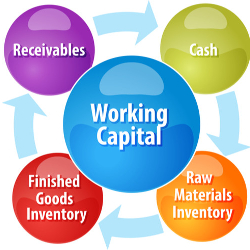
Your current assets include things like:
- Cash in the bank
- Accounts receivable (money customers owe you)
- Inventory that can be sold
Your current liabilities include:
- Payroll
- Rent
- Vendor payments
- Short-term debt
- Taxes due
You’ll find these numbers on your balance sheet.
If your current assets are greater than your current liabilities, you have positive working capital. That means your business can meet its short-term obligations without stress.
If your liabilities are higher than your assets, you may face cash flow pressure — even if your company is profitable overall.
That’s where working capital financing comes in. It’s designed to support the gap between money going out and money coming in.
Working capital financing exists to fill temporary gaps between cash going out and cash coming in. It is not usually meant for purchasing real estate or long-term fixed assets. Instead, it supports day-to-day operations: covering payroll, buying inventory, handling seasonal slowdowns, or funding growth initiatives.
In 2026, access to working capital loans has expanded beyond traditional bank loans. Business owners now have multiple financing options tailored to different use cases, credit profiles, and business goals.
Why Working Capital Financing Matters More in 2026
 Economic shifts, rising operating costs, supply chain fluctuations, and tighter bank underwriting standards have changed how companies approach liquidity. Even strong businesses can face short-term cash shortages due to:
- Delayed customer payments
- Large outstanding invoices
- Seasonal revenue swings
- Inventory buildup before peak sales
- Unexpected equipment repairs
- Expansion into new opportunities
Working capital financing provides flexibility. It allows business owners to continue operating smoothly while positioning themselves for growth.
Common Working Capital Financing Options
- Short-Term Working Capital Loans
Short-term working capital loans remain a popular financing option. These working capital loans typically have repayment terms ranging from 3 to 18 months. They are structured as lump-sum advances repaid through fixed monthly payments or sometimes weekly payments.
These loans are commonly used for:
- Covering payroll gaps
- Purchasing inventory
- Funding marketing campaigns
- Paying urgent vendor balances
Compared to long-term bank loans, short-term working capital loans often have faster approvals. However, interest rates can be higher depending on credit approval strength and revenue consistency.
This option works well when the use case involves a defined repayment source, such as incoming contracts or expected receivables.
- Business Line of Credit
A business line of credit is one of the most flexible forms of working capital financing. Unlike a term loan, you are approved for a maximum credit limit and draw funds only when needed.
Credit lines function as revolving credit. Once you repay what you borrow, the funds become available again. A business line of credit can be used repeatedly, making it ideal for businesses that experience regular cash flow fluctuations.
Typical use cases include:
- Seasonal inventory purchases
- Temporary revenue slowdowns
- Managing accounts payable
- Taking advantage of vendor discounts
Because interest is only charged on the amount used, credit lines provide cost-efficient liquidity. In 2026, many lenders evaluate not only personal credit but also business revenue trends and banking activity when determining credit approval.
1. Bridge Loan Financing
 Bridge loan financing has become increasingly common in working capital finance strategies. A bridge loan is a short-term funding solution designed to “bridge” the gap between an immediate financial need and a future cash event.
For example:
- Waiting on large outstanding invoices
- Pending contract payments
- Refinancing approval delays
- Temporary revenue disruptions
Bridge loans are typically structured for shorter durations than standard working capital loans. They focus heavily on revenue history and cash flow consistency rather than long-term collateral like real estate.
This financing option is especially valuable when timing matters. If a business owner needs immediate capital to secure discounted inventory or fulfill a large purchase order, a bridge loan can provide fast access to funds while longer-term financing is arranged.
Merchant cash advances (MCAs) are another form of working capital financing. While technically not a loan, a merchant cash advance provides a lump sum of capital in exchange for a percentage of future credit card or debit card sales.
This financing option is common among:
- Retail businesses
- Restaurants
- Service providers with steady card transactions
Repayment is typically tied to daily sales volume. When sales are strong, payments are higher. When sales dip, payments decrease proportionally.
Merchant cash advances can provide fast approvals and minimal documentation requirements. However, business owners must evaluate the total repayment cost carefully, as factor rates may be higher than traditional working capital loans.
 Invoice factoring is ideal for businesses that issue invoices with long payment terms. If you have significant outstanding invoices, factoring allows you to convert those receivables into immediate cash.
Here’s how it works:
- You sell your invoices to a factoring company.
- The factoring company advances a percentage upfront (often 70–90%).
- When the customer pays, the remaining balance is released minus fees.
Invoice factoring improves cash flow without adding traditional debt to the balance sheet. It is especially beneficial for B2B companies, trucking businesses, staffing agencies, and contractors.
For companies with slow-paying customers, invoice factoring can stabilize working capital and reduce reliance on bank loans.
4. Trade Credit
 Trade credit remains one of the most overlooked working capital strategies. Vendors may extend payment terms (Net 30, Net 60, or longer) to businesses in good standing.
By negotiating longer payment terms, companies effectively create internal working capital without borrowing. This strategy requires strong vendor relationships and consistent on-time payments.
Trade credit works best when inventory turnover is predictable and profit margins can support the extended payment window.
5. Equity Contributions
For startups or early-stage businesses, equity remains an important source of working capital. This may include:
- Owner contributions
- Friends and family investments
- Angel investors
Equity financing does not create debt, but it may dilute ownership. It is often used when traditional working capital loans are unavailable due to limited operating history.
Seasonal Businesses and Working Capital Needs
Seasonal businesses face unique financial challenges that year-round businesses may not experience. Retailers, landscapers, tax preparers, holiday-based sellers, tourism operators, and construction companies often generate the majority of their revenue during specific months of the year. Outside of peak season, cash flow can tighten quickly, even if the business is profitable on paper.
This creates a cycle where expenses continue year-round, but revenue does not.
Working capital financing allows seasonal businesses to:
- Build inventory before peak season
- Cover off-season payroll and fixed overhead
- Invest in marketing campaigns ahead of demand
- Repair or upgrade equipment before the busy period
- Maintain stable operations during slow months
Without proper planning, a seasonal dip can drain current assets and create pressure on the balance sheet. A business line of credit or short-term working capital loans are especially helpful for managing cyclical cash flow patterns because they provide flexible access to funds when revenue slows and can be repaid once peak sales return.
Here’s an important tip for seasonal operators: when working capital is tight, consider equipment financing as part of your strategy. Instead of using liquid working capital to purchase equipment outright, structured equipment financing preserves cash reserves. For established businesses with strong financials, many equipment financing companies offer seasonal payment structures. This means payments can be reduced or deferred during slow months and increased during peak season when revenue is strongest.
By aligning repayment schedules with revenue cycles, seasonal businesses protect their liquidity. Preserving working capital allows you to handle payroll, vendor obligations, and unexpected expenses without unnecessary strain. In many cases, structuring equipment payments around peak cash flow can be more strategic than using traditional bank loans or depleting cash reserves.
Smart seasonal planning is not just about surviving the slow season — it’s about positioning your business to maximize profitability when demand returns.
How Lenders Evaluate Credit Approval in 2026
 In 2026, lenders use a broader evaluation model than in the past. Credit approval is based on:
- Time in business
- Monthly revenue consistency
- Industry stability
- Bank deposit history
- Personal credit score
- Business credit profile
- Existing debt obligations
Traditional bank loans may require stronger financial documentation, including tax returns and financial statements. Alternative lenders may rely more heavily on recent bank activity and revenue trends.
Maintaining your accounts in good standing improves approval odds and access to better terms.
Working Capital and the Balance Sheet
Working capital directly impacts how lenders view your financial health. On your balance sheet:
- Current assets include cash, receivables, and inventory.
- Current liabilities include short-term debt, accounts payable, and accrued expenses.
A healthy working capital ratio demonstrates liquidity and financial stability. Businesses with poor liquidity may struggle to obtain favorable credit lines or term financing.
Regularly reviewing your balance sheet helps identify potential cash flow risks before they become critical.
Matching the Right Financing Option to the Right Use Case
Not every financing option is appropriate for every situation.
- Use a business line of credit for ongoing, flexible needs.
- Use bridge loan financing for short-term gaps tied to predictable incoming funds.
- Use invoice factoring when receivables are strong but cash flow is tight.
- Use merchant cash advances when sales volume supports percentage-based repayment.
- Use short-term working capital loans for defined, time-sensitive expenses.
Understanding the specific use case ensures the financing aligns with your business goals rather than creating unnecessary strain.
Avoiding Common Mistakes
Business owners often misuse working capital financing by:
- Using short-term loans for long-term investments like real estate
- Overleveraging with multiple merchant cash advances
- Ignoring repayment schedules
- Failing to compare total financing costs
Working capital financing should support growth, not create dependency.
Final Thoughts on Working Capital Financing in 2026
Working capital financing continues to be one of the most powerful tools available to business owners. Whether through working capital loans, credit lines, merchant cash advances, invoice factoring, or bridge loan financing, businesses now have more flexibility than ever before.
The key is understanding your balance sheet, identifying your specific use case, and choosing the financing option that supports your short-term liquidity while aligning with long-term business goals.
When structured properly, working capital financing doesn’t just keep the lights on. It creates stability, supports growth, and positions your company to pursue new opportunities with confidence in 2026 and beyond.
Updated 02/13/2026
Related Resources:
Watch our video about The 4 Most Common Types of Working Capital Financing:
Related Article:
5 Tips On How To Increase Your Working Capital